- Higher degree of programming flexibility
- Self configurable via panel keyboard
- Can connect up to 64-312 addressable devices per loop
- Single Point Detection
- Day/night function
- Has small number of circuits connected to the device
- Each circuit connected to the alarm covers a zone
- LED lights indicate the activated zone in a building
- Can detect the affected zone not the particular device
- Can connect up to 20 devices in a zone
Smoke Detection & Fire Alarm System
The purpose of the fire detection and alarm system is to assist in detecting fire, heat, or smoke and to promptly notify the building's occupants to evacuate. Addressable and conventional fire alarm systems are the two varieties of fire alarm systems.
Types of Fire Alarm System
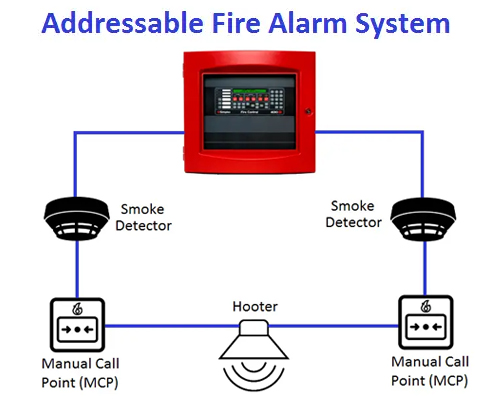
Addressable Fire Alarm System
Every smoke detector and other device in an addressable fire alarm system has a unique address, or name, that is recognised by the fire alarm panel. This shortens the amount of time needed to locate the fire or smoke by helping to pinpoint the precise site of the fire's or smoke's start, even in multi-story buildings.
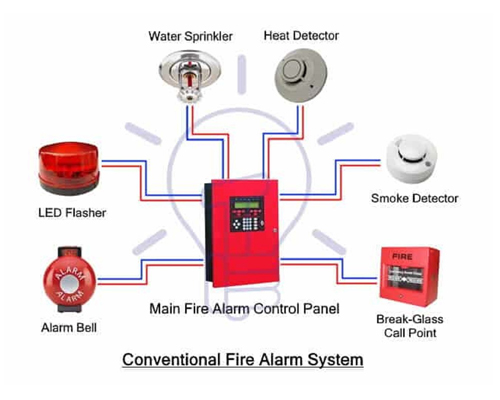
Conventional Fire Alarm System
Up to 20 smoke detectors can be found in each zone of the conventional fire alarm system. The Fire Alarm Control Panel indicates the impacted zone when there is a fire or smoke.
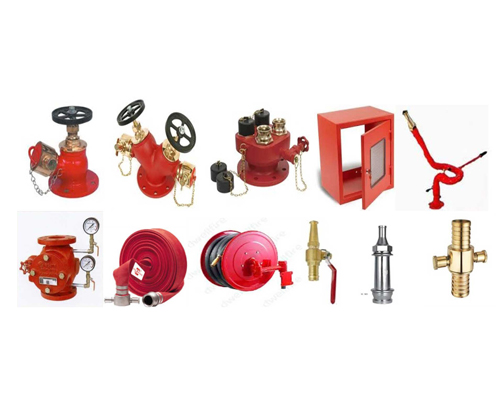
- Fire Hydrant Pumps
- Pipe LinePanel For Pumps
- Gate Valves
- Butterfly Valves
- Non Return Valves
- Hydrant Valves
- Air Release Valves
- Pressure Gauges
- Pressure Switches
- Y Strainers
- Hose Reel with 30 / 36 / 40 Mtr. Hose
- RRL Hose and Nozzles
- Hose Cabinets & Shutters
Fire Hydrant System
This building's interior features a vertical galvanised pipe system. It will have a primary entrance that is situated outside the structure, typically on the ground floor, and is housed in a metal enclosure with a glass door. These risers are designed to enable the fire and rescue services to attach a lay flat hose to it and raise the water level to the needed floor in order to combat a fire.
Prime Components
- Types: Can be electric, diesel, or a combination.
- Function: Increases water pressure to ensure sufficient flow for firefighting efforts.
- Maintenance: Regular testing and inspections to ensure operational readiness.
- Internal Hydrants: Located within the building for quick access.
- External Hydrants: Positioned outside for fire department use.
- Design: Must be easily accessible and clearly marked.
- Piping: Designed to handle the flow and pressure required during firefighting.
- Valves: Includes isolation valves, check valves, and pressure relief valves to manage water flow and prevent backflow.
- Hoses and Nozzles: Equipped for immediate firefighting use.
- Storage: Should be organized and easily accessible within the pump room.
Fire Pump Room With Hydrant
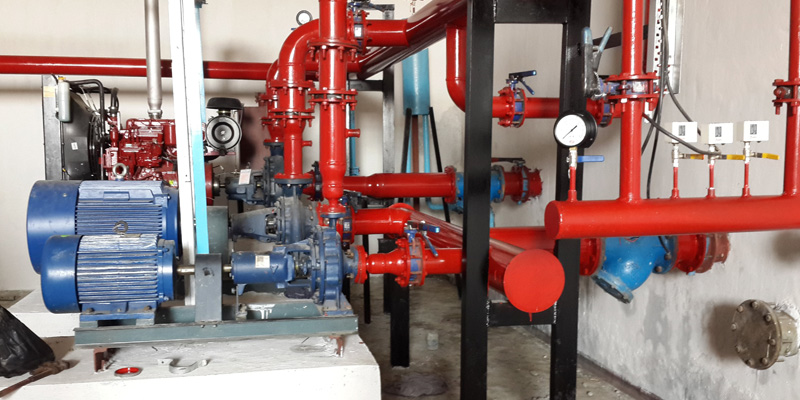
A Fire Pump Room with Hydrant System is essential for effective fire protection in commercial and residential buildings. This system ensures a reliable supply of water at high pressure, enabling prompt response to fire emergencies.
Key Components
Fire Pump
Hydrant System
Piping and Valves
Fire Suppression Equipment
- Sufficient large water reservoir
- Sprinkler Pump
- Sprinkler Bulb / Head
- SS Flexible Hose (Braided / UnBraided)
- Reducers
- Branch Pipe
- Valves & Switches
Fire Sprinkler System
A fire sprinkler system is made up of a water distribution piping system that has fire sprinklers connected to it, as well as a water supply system that supplies enough pressure and flow rate.
Components (Sprinkler)
- Heat extraction from the fire and fuel
- Oxygen reduction by steam smothering
- Blocking of radiant heat transfer
- Cooling of combustion gases
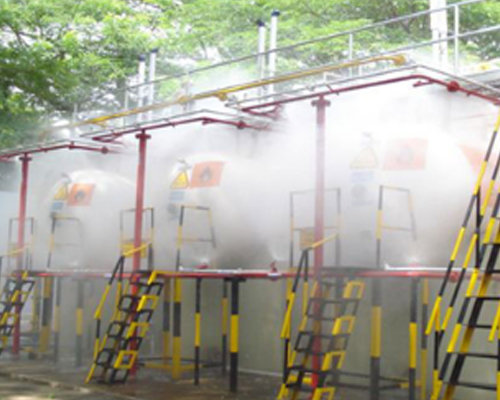
Water Mist System
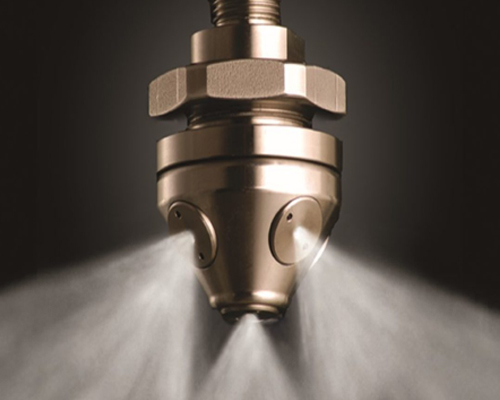
At pressures between 80 and 200 bars, pure water is transformed into fine mist by the Water Mist Fire Suppression System. The high pressure atomisation of water results in a significantly larger cooling surface area compared to traditional low pressure systems, allowing for a faster extraction of heat from fires.
Water Mist System
- A Deluge Valve
- Horizontal Storage Vessels - LPG Bullets
- Vertical Storage Vessels - Benzene, Xylene, Toluene Tanks
- Spherical Storage Vessels - LPG Bullets & Spheres
- Deluge Valve
- Isolation Valve
- Quartzoid Bulb Detectors
- Open Spray Nozzle
- Transformers, Oil filled Equipments of Power Stations
- Turbo-Alternators
- Oil Field Boiler Rooms & Oil Quenching Tanks
- Deluge Valve
- Isolation Valve
- Quartzoid Bulb Detectors
- Projectors
Deluge System
Typically, a deluge system is a kind of fire suppression system intended to quickly and efficiently apply a huge amount of water to a fire. It's frequently utilised in high-risk settings, such chemical industries, refineries, or regions with high fire loads, where a quick response is required to put out fires.
Medium Velocity Water Spray System
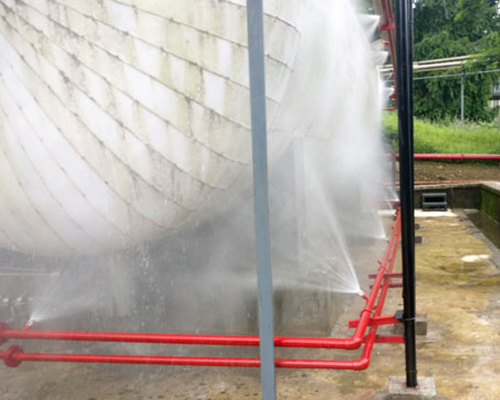
A Medium Velocity Water Spray System is deployed in situations where it is not always practicable or desirable to put out a fire, such as those containing flammable fluids with flash points below 650 C (1500 F). It also controls burning and provides cooling and exposure protection against such threats. These 600 C systems are also occasionally utilised in coal conveyors, cable galleries, and other power plant applications.
System Components
High Velocity Water Spray System
In order to put out flames containing liquids that have flash points of at least 650 C (1500 F), a high velocity water spray system is installed. The system uses the three extinguishment principles of smothering, cooling, and emulsification. Applying these ideas will cause the fire to go out in a matter of seconds.
System Components
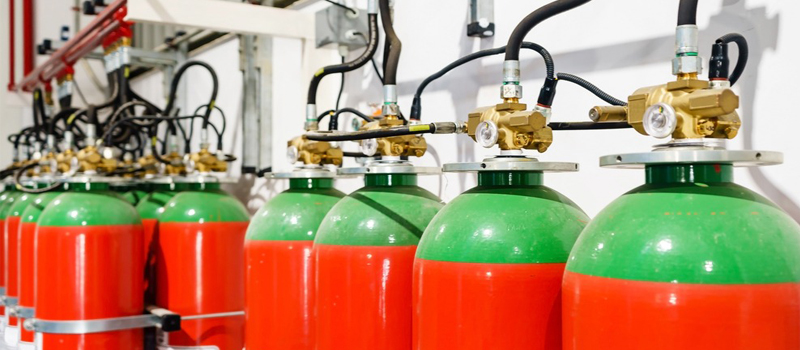
Gaseous Fire Suppression System
In a gaseous fire suppression system, a fire is put out using chemical agents and inert gases.Another name for it is "Clean Agent Fire Suppression." Agent supply piping, agent dispersion nozzles, wiring control panels, fire detectors, agent storage containers, agent release valves, and agent are the usual components of the system.
- Ensures optimum design of Xtralis VESDA / Honeywell FAAST aspirating smoke detection pipe networks, including branched networks
- Accurately models pipe network designs to environmental performance criteria
- Speeds the design process by automating adjustment of hole sizes
- Allows different detector performance requirements within one building
- Unique building constraints can be easily accommodated
- Custom design elements can be documented to guide the installation team
- 3D / 2D schematics to aid design and installation
- Professional reports and materials lists can be generated to add to client submissions
- Supports both metric and American measurement systemsCompatible with other Windows® – based applications
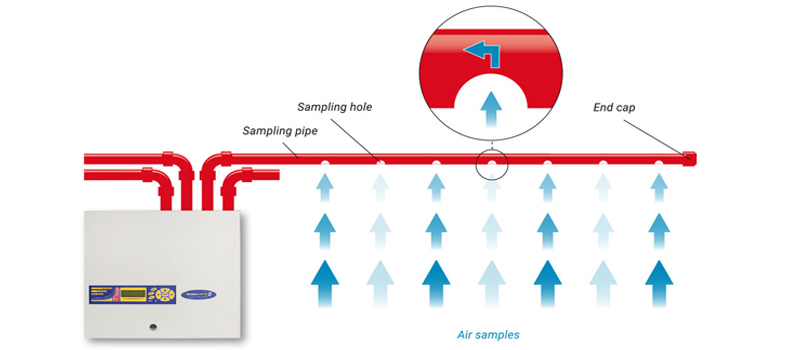
High Sensitive Smoke Detection
With the most recent advancements in Fire Alarm Aspiration Sensing Technology, HSSD is an extremely early warning fire detection system. This system makes use of a sophisticated, intelligent smoke detector that uses a network of pipes to suck air into its sensor. In order to identify a wide range of fires while maintaining greater immunity to nuisance particulates and enabling the delivery of highly precise and discrete early warning fire detection for a wide variety of environments / applications, HSSD employs infra-red laser optical smoke detection with advanced algorithms.
Features
- Provides safe egress from a fire area during a fire
- Inhibits the fire from spreading throughout the building
- Protect life and property by reducing smoke hazards
- Provides use as a regular door pathway at all times
- Available as both Single & Double Leaf
- Available in Steel, Wood & Glass Material to add beauty to ambience
- Available with Panic Bar(s)
Fire Rated Door
There has never been a more pressing need for property protection and life safety than there is now. A building's ability to withstand fire is greatly enhanced by its fire-rated doors, which not only make it safer for people to exit a building but also help to contain the spread of smoke and fire to nearby areas. These doors are made of fire-rated core materials and are intended to provide at least two hours of fire resistance.
Features of Fire Rated Doors
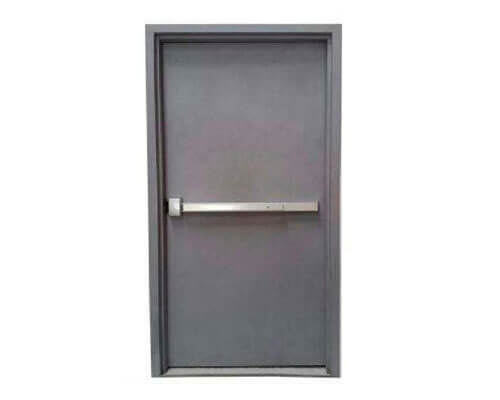
Fire - Rated Single Leaf Door With Panic Bar
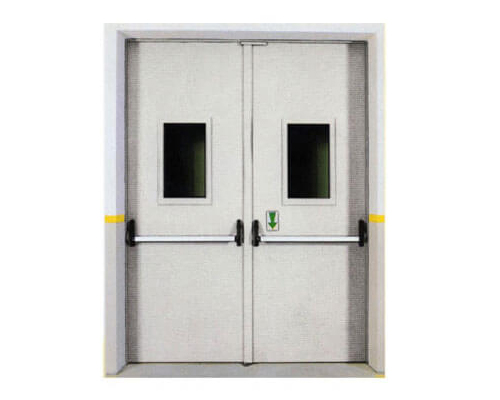
Fire - Rated Double Leaf Door With Panic Bar& Vision Panel
Fire Extinguishers
A fire extinguisher is a tool that is frequently used in emergency situations to put out or contain small fires.It is made up of a cylindrical pressure vessel that may be held in the hand and filled with a chemical that can be released to put out a fire..
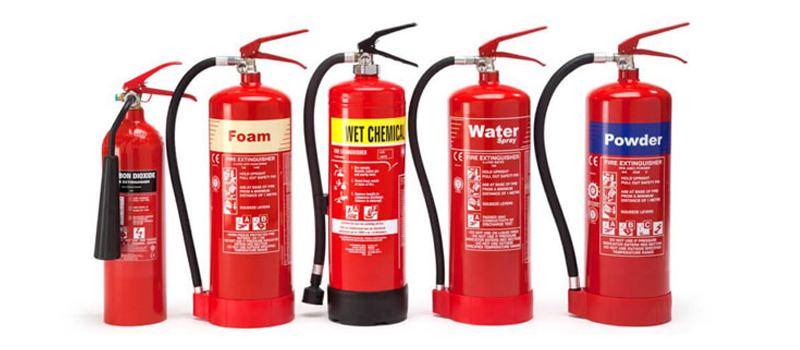
Fire Extinguisher
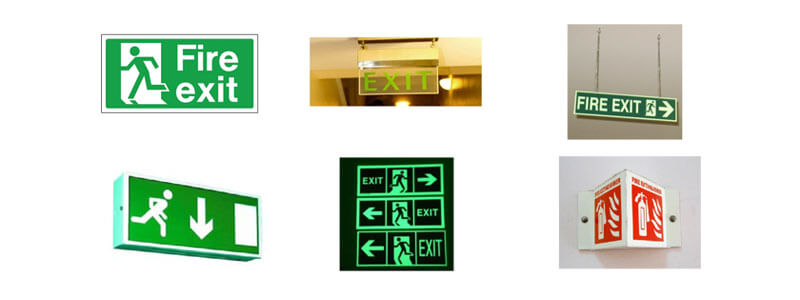
Signages
With consistent focus on current market, we are presenting a wide collection of Warning Sign board that is used to indicate a potential hazard which may result in minor or moderate injury.